Last summer, two networks did something so sensible that it apparently could not be repeated.
MGM+ premiered The Institute in July 2025. USA Network followed with The Rainmaker in August. Both were adaptations of enormously popular novels.
Both offered the kind of involving, propulsive storytelling that gives viewers something to anticipate during a season television has inexplicably decided no longer matters (we’re looking at you, summer). Both aired weekly.
Both were renewed. And neither is back this summer.
How does television keep stumbling into good ideas and then running away from them as if competence might be contagious?
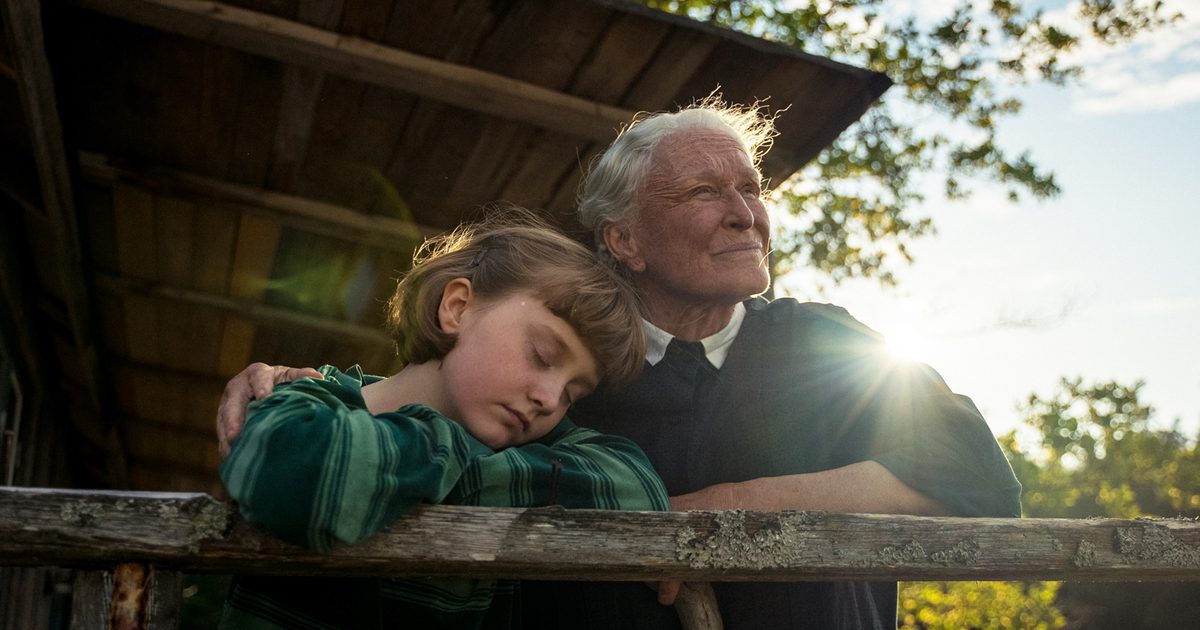
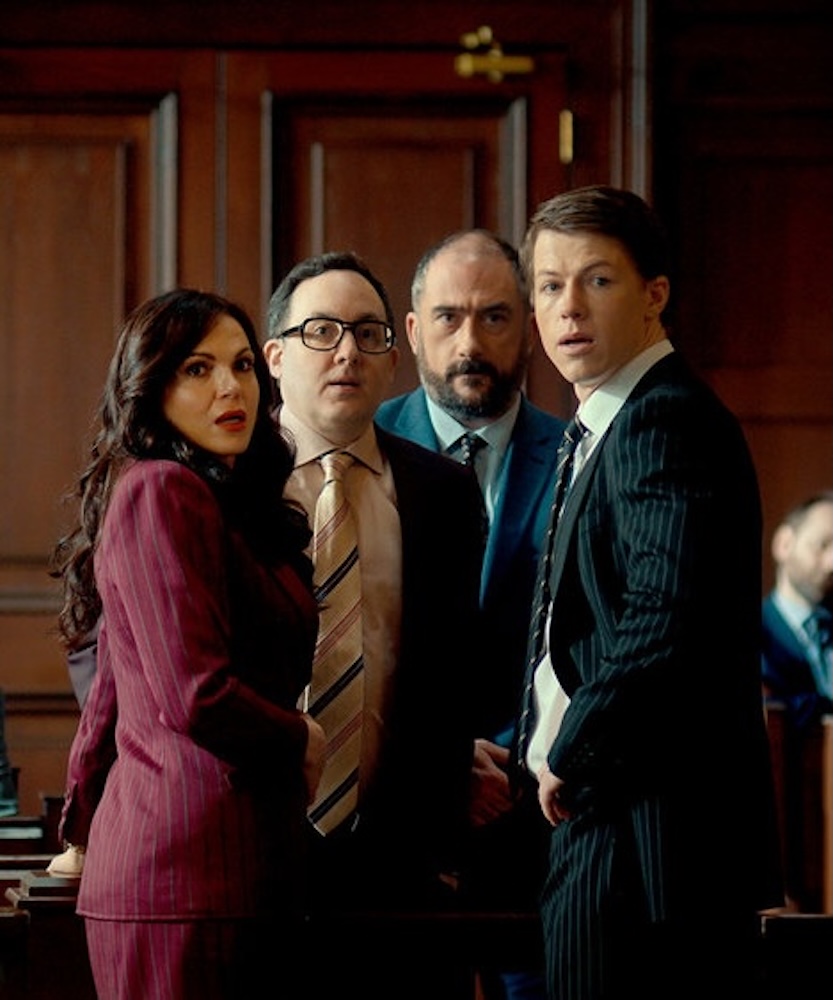
The Institute premiered on July 13, 2025, giving Stephen King fans a creepy summer mystery built around kidnapped children with extraordinary abilities, a sinister facility, and adults behaving with the sort of casual moral depravity that always feels right at home in King’s universe.
It became MGM+’s best premiere ever and was renewed for an eight-episode second season before the first had even finished airing.
The Rainmaker arrived on USA Network on August 15, 2025, bringing John Grisham’s legal thriller back to life as a weekly series.
It also marked USA’s return to original scripted programming after abandoning it for years, despite the network once being synonymous with accessible dramas people genuinely enjoyed watching.


Remember enjoying television? Charming concept.
The Rainmaker became USA Network’s most-watched freshman series in seven years and, according to Versant, delivered the number-one scripted cable original premiere of 2025. USA renewed it shortly after its October finale and announced that it would return sometime in 2026.
So here we are in August 2026.
USA Network is premiering Anna Pigeon on August 7, nearly matching the slot where The Rainmaker found its audience last year. MGM+ is airing The Westies, which premiered July 12, almost exactly one year after The Institute.
The networks clearly remember that summer exists. They simply do not seem to understand that successful shows can return to the same place on the calendar.


This is not an argument against Anna Pigeon or The Westies. New shows deserve opportunities, too.
Anna Pigeon has Tracy Spiridakos playing a national park ranger who encounters murder and danger in the wilderness. That is practically engineered for summer viewing. The Westies has J.K. Simmons, Titus Welliver, mobsters, FBI agents, and 1980s Hell’s Kitchen. There is certainly an audience for that.
But neither explains why the shows that occupied those spaces so successfully last year were not positioned to return alongside them. Two shows on a schedule at once is too much of a concept now?
Why can USA Network not build a summer schedule with Anna Pigeon followed by The Rainmaker? Why can MGM+ not use The Westies to lead viewers toward The Institute, or vice versa? If airing them all at once is too hard, at least give us something to hold on to.
Why does every television season now feel like somebody opened a bag of programs over a calendar and accepted wherever they landed?

Scheduling used to be part of television strategy. A show returned at roughly the same time every year. Viewers developed habits. Networks built nights. Seasons had identities.
Nobody needed to launch a private investigation to determine whether a renewed series might return in eight months, fourteen months, or during some random week when six other networks had the same bright idea — often the same night, incidentally.
The Institute and The Rainmaker were particularly well suited to summer because genre programming thrives when viewers have fewer demands on their attention.
The Institute was a science-fiction horror mystery with Stephen King’s name attached. It offered children in danger, psychic abilities, conspiracies, and a central mystery designed to inspire weekly discussion.
The Rainmaker combined a legal drama with murder, corruption, romance, and a sprawling conspiracy.


Neither required the familiar rhythm of the traditional broadcast season. They felt like events precisely because they arrived when the rest of television had gone strangely quiet.
That quiet is only getting louder.
The broadcast networks have pushed their fall premieres later and later. In 2026, viewers will wait until October for most new broadcast programming. Summer once served as a bridge between seasons.
Now it is a gorge television expects audiences to cross using reality competitions, reruns, and whatever streaming service happens to dump eight episodes onto the internet that week.
Why?

The audience has not stopped watching television during summer. People do not wander into the sunlight on Memorial Day and refuse to look at a screen until October. Some of us remain indoors because it is 94 degrees with humidity dense enough to qualify as a supporting character.
We would happily watch good television.
Summer is also one of the few remaining periods when a smaller network or streaming service can command attention without competing against every returning procedural, franchise drama, awards contender, and expensive prestige series in existence.
A July premiere has room to breathe. An August show can establish itself before broadcast television begins rolling out its fall schedule. Their finales can even hold weight against returning shows, proving their value even more.
The Institute and The Rainmaker demonstrated exactly how valuable that opening can be. Viewers found them. Critics discussed them. Both networks renewed them.

Versant now proudly cites The Rainmaker as one of USA’s major successes, while MGM+ has an emerging Stephen King franchise that delivered the network’s biggest premiere.
Yet neither company appears to have turned that success into an annual appointment.
The Institute’s second season began production in early 2026, and reports indicated filming was nearing completion by the end of May. MGM+ still has not announced a premiere date.
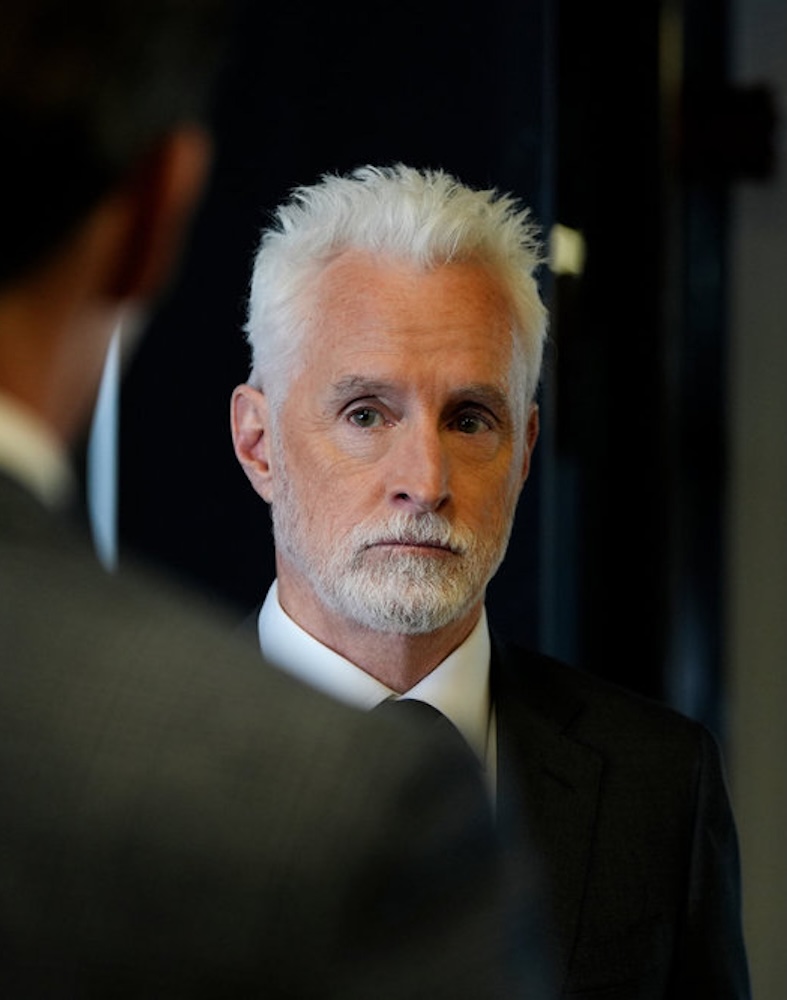
The Rainmaker has added Austin Nichols for Season 2, and USA continues to promise that the series will return in 2026, but there is no exact date. One report has placed it sometime in the fall, which would move it directly into the most crowded portion of the television calendar.
It seems like the reward for becoming cable’s biggest scripted premiere is being sent into heavier competition the following year. How does anybody win with that formula?
Didn’t years of moving shows from Sunday to Thursday and back again tell anyone that maybe people like programming familiarity?
USA Network should have been able to capitalize on The Rainmaker’s success by establishing a recognizable scripted block. Anna Pigeon could introduce a fresh mystery in early August, with The Rainmaker returning as it nears its conclusion.
Instead of one scripted success appearing each year and being left to fend for itself, USA could begin rebuilding the network identity it carelessly (yeah, I said it) discarded.
This was once the home of Monk, Psych, Burn Notice, White Collar, Royal Pains, Suits, and Covert Affairs.
Those shows (lovingly called Blue Sky shows) weren’t identical, but together they told viewers what USA Network offered. Characters mattered. Entertainment mattered. The network had a personality.

The Rainmaker’s success suggested that viewers were ready to come back. Anna Pigeon could reinforce that revival. But reviving scripted programming requires more than ordering one show at a time.
It requires building continuity, establishing expectations, and giving viewers a reason to remain engaged with the network instead of dropping in for ten weeks and disappearing again.
MGM+ has a similar opportunity.
It has assembled an intriguing collection of genre and crime programming, but its shows often feel isolated from one another. A successful series appears, disappears, and eventually returns after viewers have spent months wondering whether anybody remembered it existed.
The Westies may be a perfectly reasonable summer offering. But The Institute was not merely another show on MGM+’s schedule. It was the network’s biggest premiere. Returning it one year later should have been a priority rather than an unsolved mystery.


There may be production reasons for the delays. There usually are. Scheduling a television series involves actors, writers, sets, post-production, corporate planning, and enough spreadsheets to destroy the spirit of anyone who encounters them.
But viewers do not need every season delivered on the exact anniversary of the previous premiere. They need evidence that someone has considered how and when they will receive it.
Had MGM+ announced that The Institute would return in September, it could still use The Westies to carry viewers through the summer. Had USA confirmed The Rainmaker for late August or September, Anna Pigeon could begin rebuilding a genuine scripted lineup. Even a clear plan would help.
Instead, we get the usual silence.
Networks promote a series aggressively, encourage viewers to invest ten weeks in its story, celebrate its performance, announce a renewal, and then behave as though the audience’s part in the relationship has concluded.

We watched. We discussed. We made the shows successful. Surely we do not also need to know when they are coming back.
Except that we do. Me. I’m talking about me. I want to know when a show I love is returning!
Television is not only competing with other television anymore. It is competing with every form of entertainment available, much of which can be accessed instantly.
When a show vanishes for an indeterminate period, viewers find something else. They forget character names. They forget plot details. Sometimes they forget the series entirely. Me. I’m talking about me. I forget!
Then the network finally announces its return and seems shocked that the audience didn’t spend eighteen months standing at attention.


The Institute and The Rainmaker gave MGM+ and USA Network ideal summer successes. They filled a seasonal void, benefited from lighter competition, and gave viewers compelling weekly stories when broadcast television had little to offer.
The lesson was sitting there in plain sight: genre programming works in summer. Weekly releases work in summer. Adult dramas work in summer. Viewers will show up in summer.
Somehow, the networks looked directly at that lesson and decided not to schedule the second class.
Anna Pigeon and The Westies may find audiences of their own. I hope they do. Summer needs more scripted television, not less.
But successful new series should be additions to a summer strategy, not replacements for last year’s successes.

USA Network and MGM+ had the beginnings of annual programming traditions with The Rainmaker and The Institute.
Instead of nurturing those traditions, they have once again left viewers wondering when, where, and whether the shows they supported will fit into the calendar.
We keep hearing that television is struggling.
Maybe it would struggle a little less if the people scheduling it remembered what worked the previous year.
Agree? Disagree? I want to hear from you! Share your annoyance and expectations in the comments below.
-

Check out our list of the best lines from Star Trek: Strange New Worlds “The Griffin Incident,” Trek’s first foray into the space horror genre
-

From blindsides to big twists, Big Brother is full of iconic moments. We discuss the moments all new fans should know. Read on to find out!
-

From Gilmore Girls to Gossip Girl, these iconic couples were never part of the plan. Here’s how chemistry rewrote the script and gave us TV’s greatest romances.